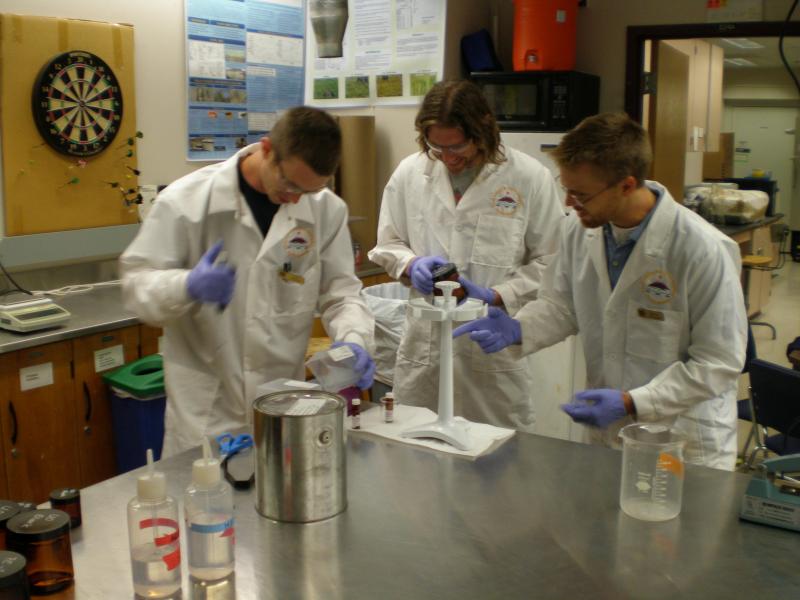
 Toxicology concerns potentially hazardous chemicals in food and the environment, and their effects on biological life. Toxic chemicals include pesticides such as insecticides and herbicides, industrial waste products, compounds that exist naturally in plants, those that contaminate foods as a result of fungal growth, and even some that are produced in the preparation and cooking of foods. Potential health effects from toxin exposures can range from immediate impairment of breathing or nerve function to chronic diseases, cancer, birth defects, and immune disorders. Toxicology research focuses on understanding mechanisms of toxicity, human and environmental risks from exposure, and means for reducing risks. Students will acquire laboratory skills in applied biochemistry and molecular, cellular, and organismal biology.
Examples of thesis titles:
- Effects of Xanthohumol on Biomarkers of Metabolic Syndrome in Obese Rats. Arlyn Moreno Luna. Mentor: Dr. Fred Stevens, Pharmacy.
- A Pro-Inflammatory Agent, Lipopolysaccharide, Can Mimic the Effects of Aging on Spatial Reference Memory. Emily Escobedo. Mentor: Dr. Kathy Magnusson, Biomedical Sciences, Veterinary Medicine.
- Method development for extraction and purification of dermal RNA from FVB/N mice treated with environmental PAH mixtures. Andy Larkin. Mentor: Dr. David E. Williams, Environmental and Molecular Toxicology.
- Disruption of Circadian Clock Regulation in the Brain by Perfluorinated Compounds. Rebecca Bathke. Mentor: Dr. Patrick Chappell, Zoology.
- Integration of Embryonic Zebrafish and Passive Sampling Device Extracts to Explore Toxicity. Margaret Corvi. Mentor: Dr. Kim Anderson, Environmental and Molecular Toxicology.
- Superior Anti-tumor Activity from a Gemcitabine Prodrug Incorporated into Nanoparticles. Michael Sandoval. Mentor: Dr. Zhengrong Cui, College of Pharmacy.
- Toxicogenomic analyses of chitosan based hemorrhage control patches. Andrew Colburn. Mentor: Drs. John Mata, Veterinary Medicine.
- Developing the Zebrafish (Danio rerio) as a model to evaluate the toxicity of chlorinated and non-chlorinated solvents. Matthew Wenning. Mentor: Drs. Robyn Tanguay, Environmental and Molecular Toxicology.
- Method development in in vitro immune response. Jacob Huber. Mentor: Dr. Nancy Kerkvliet, Environmental and Molecular Toxicology.
- Selenoprotein W: a search for selenosulfide bonding and severity of damage inflicted on intramolecular disulfide bonds as a result of UV irradiation. Kendall dutcher. Mentor: Dr. Doug Barofsky, Environmental and Molecular Toxicology.
- Trees as biomonitors for historical environmental impact. Kim Padilla. Mentor: Dr. Kim Anderson, Environmental and Molecular Toxicology.
- In vitro mechanisms of chlorophyllin antimutagenesis against dibenzo(a,l) pyrene (DBP). Marita Barth. Mentor: Dr. George Bailey, Environmental and Molecular Toxicology.
- Detecting apoptosis in carcinogen exposed trout livers. Michelle Zipperman. Mentor: Dr. Jan Spitsbergen, Environmental and Molecular Toxicology.
- Determination of the flavin-containing monooxygenase (FMO) distribution in mouse lung and liver. Pachida Lo. Mentor: Dr. David Williams, Environmental and Molecular Toxicology.
- Expression of cytochrome P450 1A in tumor sensitive and resistant lines of Zebrafish. Amber Taylor. Mentor: Dr. Jan Spitsbergen, Environmental and Molecular Toxicology.
- Microbial degradation of linear alkyl-benzene sulfonates in sewage-contaminated groundwater. Sean Eby. Mentor: Dr. Jennifer Field, Environmental and Molecular Toxicology.