
At the North Willamette Valley Research and Extension Center, we have pioneered a first-of-its-kind research initiative in Oregon that integrates solar energy with sustainable water management. As part of the Oregon Water Initiative Managed Aquifer Recharge Innovation Field Site, our work focuses on developing localized infrastructure to demonstrate how solar panels can do more than generate power—they can also harvest water for aquifer recharge and future irrigation needs.
The Need for Innovation in Water Management
With increasing groundwater restrictions in Oregon’s critical groundwater areas, farmers face growing challenges in securing reliable water sources for irrigation. While solar panels are widely recognized for their renewable energy benefits, they also offer an untapped opportunity to capture and direct rainwater, a resource that often goes unused. Our research aims to bridge the gap between clean energy production and sustainable water solutions by designing optimized rainwater harvesting systems that collect and store precipitation directly from solar panel surfaces.
What We Are Doing at the Site
At this field site, we are:
- Developing and optimizing plot-scale infrastructure to capture, store, and recharge harvested rainwater back into the local aquifer or direct it for future irrigation.
- Analyzing water quality to understand potential contaminants, leaching, and chemical interactions as water flows off solar panels.
- Studying system performance in real farm conditions, ensuring that these innovations can be easily scaled and integrated into agricultural operations.
- Engaging with stakeholders—farmers, policymakers, and water managers— to demonstrate the technology in action and evaluate its economic and environmental benefits.
This site is not just a research facility; it is a living laboratory and demonstration hub, where farmers and decision-makers can see firsthand how renewable energy infrastructure can contribute to long-term water sustainability.
The Bigger Picture: A Model for the Future
By merging solar technology with water conservation strategies, we envision a future where farms not only generate clean energy but also contribute to groundwater resilience. This research is a critical step toward climate-adaptive agricultural solutions, providing farmers with new tools to sustain productivity while protecting water resources.
This research offers a science-backed, field-tested approach to solving Oregon’s water challenges. Through innovation, collaboration, and real-world implementation, we are demonstrating that sustainable agriculture and renewable energy can work hand-in-hand for a more resilient future.
Stay connected with us as we continue to explore the next frontier in sustainable water management and clean energy solutions.

First gutter installation on the two rows of solar panels being used to collect rainwater runoff.
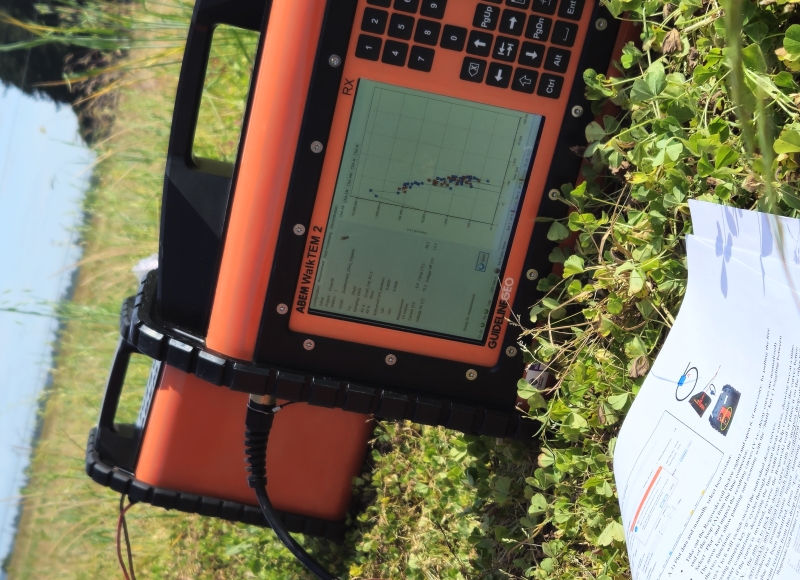
ABMWALK TEM (Transient Electromagnetic) System for Collecting Data to Characterize Subsurface Features and Identify Optimal Locations for Successful Drywell-MAR.

Dr. Salini Sasidharan, alongside PhD students Ruan Gomes and Jonathan Opoku from the Sustainable Groundwater Quantity and Quality Innovation Lab, demonstrate Rainwater Harvesting from Agrivoltaics Panels for Aquifer Recharge Using Drywell-Managed Aquifer Recharge