

Gina Angelella
Gina Angelella is a Research Entomologist at the Temperate Tree Fruit and Vegetable Research Unit in Wapato, WA, who started in January of this year. Her focus is on the biology, ecology, and behavior of insect pests and vectors of potato plant pathogens, and the epidemiology and mechanisms of insect-vectored potato plant pathogens. She joined the USDA-ARS from Virginia Tech, where she was a postdoctoral researcher with Dr. Megan O’Rourke studying the ecosystem services and insect community dynamics on farms associated with pollinator refuge plantings. Prior to that, she did her doctoral work with Dr. Ian Kaplan at Purdue University on various aspects of nonpersistent aphid-vectored virus epidemiology in cucurbits, and her master’s work with Dr. David Riley at the University of Georgia on thrips’ reproduction and population dynamics relative to pine pollen dietary supplementation.

Josephine Antwi
Josephine Antwi is an Assistant Professor of Entomology at Oregon State University, Hermiston Agricultural Research and Extension Center. Her research goal is to use plant-insect-microbial interactions, insect molecular ecology, and the role that the environment plays on these interactions to a develop a sustainable integrated pest management program for field crop insect pests.

Judit Barroso
Judit Barroso is an Associate Professor at the OSU - Columbia Basin Agricultural Research Center, which responsibilities include developing and leading research and outreach programs that integrate chemical, cultural, and mechanical weed control measures using new or novel approaches for weed management in the wheat-based production systems of eastern Oregon. Her program focuses on weed management issues of critical importance in dryland cropping systems, including fallow-based systems, with the intent to foster adoption of best practices leading to effective weed control, while preserving the environment and maintaining cropping systems sustainability. She received her PhD in Weed Science from the Polytechnic University of Madrid (Spain).

Aaron Becerra-Alvarez
Dr. Becerra-Alvarez is the weed science extension specialist for vegetable and specialty seed crops of Oregon. His research and extension program focuses on understanding the plant-management-environment interactions and how we can use that knowledge to develop integrated weed management plans in the field. He works with both conventional and organic vegetable producers. His active research involves exploring new technology for weed control and optimizing current available options in processed and fresh market vegetables and vegetables grown for seed. His extension program aims to improve weed science and integrated pest management knowledge among the workforces. He serves as the editor for the Pacific Northwest Weed Handbook. Dr. Becerra-Alvarez received his PhD at the University of California - Davis conducting weed science research in water-seeded rice.

Carlos Bonilla
Dr. Bonilla is a Professor at the Department of Crop and Soil Science, Oregon State University, and Director of the Hermiston Agricultural Research & Extension Center. As a Soil Physicist, his research focuses on soil physics and hydrology, as well as on soil health and carbon sequestration through natural and managed landscapes. He received his B.S. in Agronomy and M.S. in Hydraulic and Environmental Engineering from the Pontificia Universidad Católica de Chile and his Ph.D. in Soil Science from the University of Wisconsin–Madison.

Kristie Buckland
Kristie Buckland is the Vegetable and Specialty Seed Specialist at the North Willamette Research and Extension Center. Kristie earned a B.S. in Aeronautical Engineering from the U.S. Air Force Academy. Following a ten year career in the Air Force, she completed her M.S. and Ph.D. at Utah State University. The Vegetable and Specialty seed program strives to identify management strategies to increase farm sustainability using a systems approach. Kristie has worked for 11 years in both conventional and organic vegetable and seed production systems. She focuses on integrated management strategies such as inter-cropping, trap cropping, crop rotations, as well as new crop options and adopting new technologies.

Aaron Esser
Aaron Esser grew up on a farm near Genesee, Idaho, and he received his bachelor’s degree in Agricultural Economics and master’s degree in plant science at the University of Idaho. He is a Regional Extension Agronomist in the Lincoln-Adams Extension Area with Washington State University. He also serves as the Chair of the WSU Wilke Research and Extension Farm near Davenport. He has been with WSU for 26 years. His program focuses on assisting grower adoption of conservation farming systems, and more intensive crop rotations that improve soil health, productivity, and overall profitability.

Max Feldman
Dr. Max Feldman is a Research Geneticist with the USDA-ARS focused on potato germplasm enhancement. A majority of this work is focused on discovery and introgression of disease resistance loci and other beneficial alleles from wild or primitive germplasm and the development of marketable potato varieties. Dr. Feldman possesses over 20 years of agricultural research experience primarily focused on using forward and reverse genetics to better understand the mechanisms underlying plant traits. Much of this work has focused on development of improved measurement strategies (image analysis, analytical chemistry) in combination with high-throughput genotyping and bioinformatic analysis to extract knowledge from large public datasets. Our primary objective is to utilize the power of quantitative genetics to breed more profitable and sustainable potato varieties for our stakeholders in the Pacific Northwest and farmers around the globe.

Kenneth Frost
Ken Frost is an Associate Professor and Extension Plant Pathologist in the Department of Botany and Plant Pathology and located at the Hermiston Agricultural Research and Extension Center in Hermiston, Oregon. His research focuses on the ecology, epidemiology, and management of pathogens that cause diseases of irrigated vegetable crops. The primary goal of his research program is to develop practical and economically and environmentally compatible disease management strategies to minimize disease outbreaks and enhance the efficiency of vegetable crop production in Oregon. The research he conducts seeks to learn how variability in the environment affects pathogen growth, survival, and dispersal and influences disease intensity and pattern. Some of his recent studies have examined how different crop management practices change the soil microbiome and are associated with varying disease and yield outcomes. He is also interested to learn how pathogens and other members of the microbial community present in tare soils influence microbial community establishment on potato roots and plant health. He received his M.S. and Ph.D. in Plant Pathology from the University of Wisconsin – Madison.

Cynthia Gleason
Cynthia Gleason is an assistant professor at Washington State University in the Department of Plant Pathology working in nematology. She obtained her PhD from UC Davis and then worked at both the John Innes and CSIRO before moving to Georg August University (Germany) as a Jr. Professor in 2011. She moved to Pullman in 2016 to continue her research root-knot nematodes, particularly focusing on the root-knot nematode Meloidogyne chitwoodi, which is a significant threat to potato farmers in the region. Her lab uses molecular and biochemical approaches to understand how root-knot nematodes infect roots and how plants respond to root invasions. Her research program also looks at ways to improve nematode detection and diagnostics.
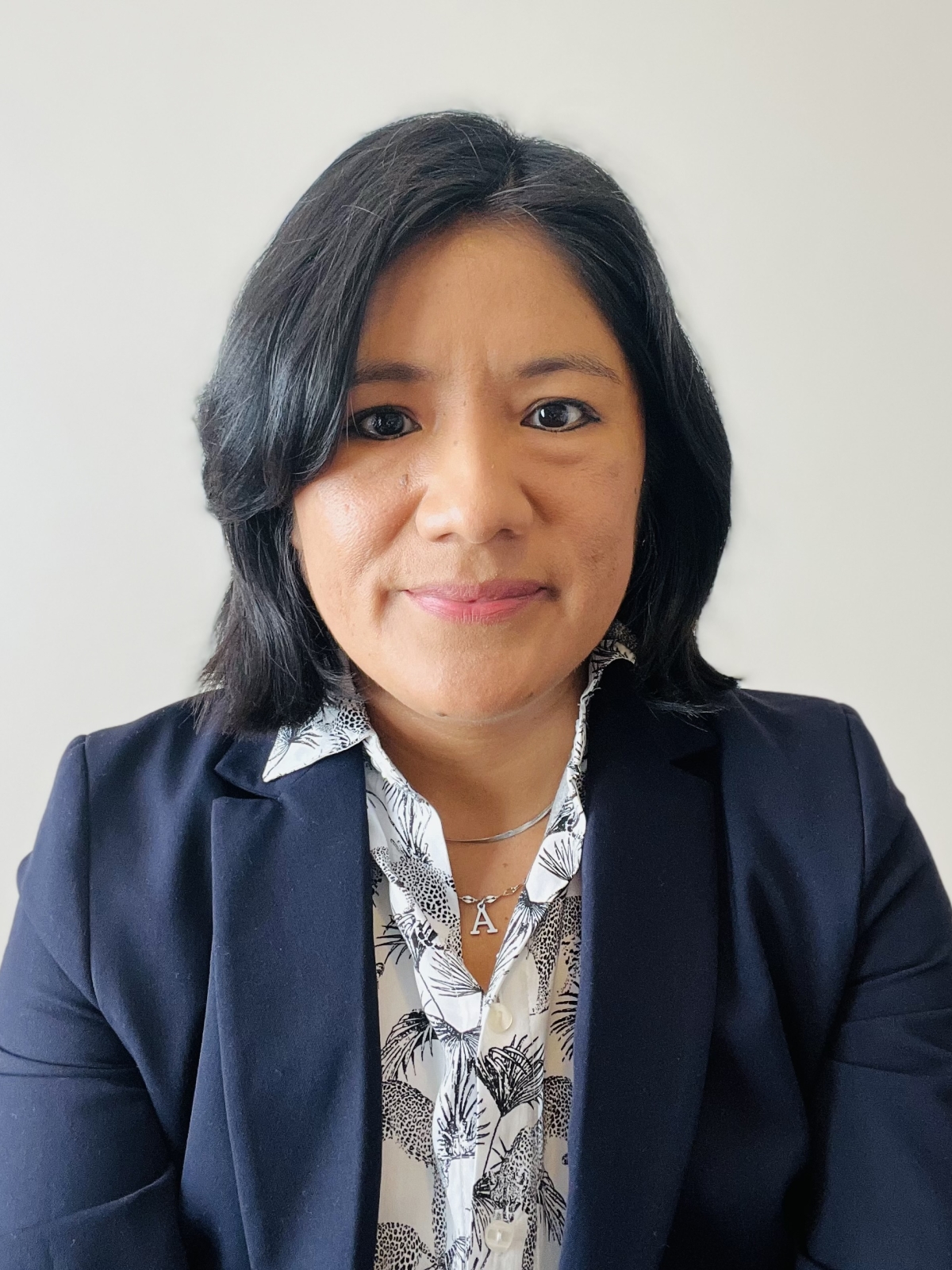
Angela Leon
Angela Leon is originally from Peru and came to the United States to pursue a master’s degree in Animal Science at the University of Maine, followed by a Ph.D. in Agronomy at the University of Wisconsin–Madison. During her doctoral studies, she developed a strong interest in soil aggregation and conducted field analyses in Midwest cropping systems to assess aggregate abundance and the soil-binding agents involved in their formation. She also evaluated how two types of binding agents influence the formation of stable aggregates under controlled incubation conditions. She joined HAREC to continue exploring soil aggregation processes, which play a key role in maintaining soil health. Currently, she analyzes the abundance and stability of soil aggregates across the diverse cropping systems established at HAREC.

Andrew McGuire
Andrew McGuire is an Irrigated Cropping Systems Agronomist with Washington State University Extension. He works with farmers to address irrigated farming challenges in the Columbia Basin of Washington state.
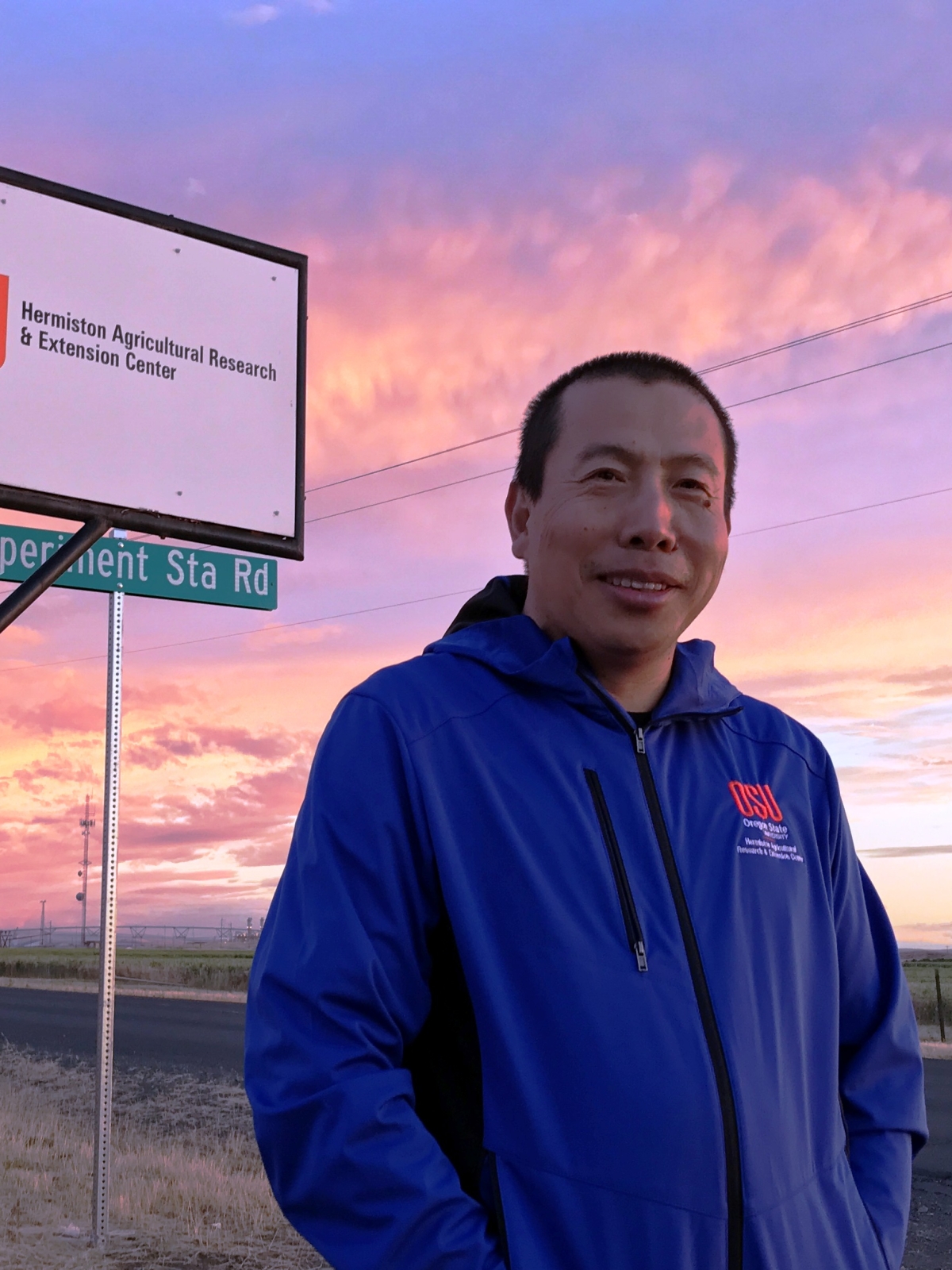
Ruijun Qin
Dr. Ruijun Qin is an Extension Agronomist at Oregon State University's Hermiston Agricultural Research & Extension Center and an Associate Professor in the Department of Crop and Soil Science at OSU. He plays a key role in organizing growers' meetings and field days in Northeastern Oregon and Southeastern Washington. His extension and research efforts focus on nutrient and water management, crop production, cropping systems, cover crops, organic amendments, environmental quality, and soil health. Previously, Dr. Qin worked at the San Joaquin Valley Agricultural Research Center of USDA-ARS and the University of California, Davis, where his research focused on soil fumigation, high-value crop production, plastic mulching, and water management. He earned his Ph.D. in Agronomy from the Swiss Federal Institute of Technology (ETH Zurich), where he studied root morphology, root distribution, crop production, tillage systems, and crop rotation in temperate regions. He also holds an MSc in Soil Science from the Chinese Academy of Agricultural Sciences, where he worked on projects related to soil reclamation, organic amendments, cropping systems, and long-term fertilization experiments in subtropical zones. Dr. Qin has published nearly 90 peer-reviewed papers and delivered more than 100 presentations at various professional conferences. As an extension specialist, he has organized over 30 growers' meetings and field days and delivered 95 non-credit presentations to more than 5,500 attendees at extension events. He is an Associate Editor of the Agronomy Journal and a guest editor for Agronomy MDPI.

Hannah Rivedal
Dr. Hannah Rivedal is a Research Plant Pathologist in the USDA-ARS Forage Seed and Cereal Research Unit in Corvallis, Oregon. She received her bachelor’s in Plant Pathology from the University of Wisconsin in 2013 and her Ph.D. in Plant Pathology from Oregon State University in 2019. Dr. Rivedal has over 10 years of plant pathology research experience in specialty crops, including 2 years as a plant disease diagnostician at HAREC. Her current research program is dedicated to understanding the biology, epidemiology, and impact of pathogens on crop and seed health within seed crop production systems, with a focus on turf, forage grasses and legumes grown for seed and hemp.

Vidyasagar (Sagar) Sathuvalli
Associate Professor, Potato Breeding
Ph.D. - 2010 - Oregon State University
M.S. - 2007 - Oregon State University
B.S. - 2002 - Tamil Nadu Agricultural University (TNAU), INDIA
My research focuses on Potato Breeding and Germplasm Improvement using traditional, molecular, and genomic tools. My program will aim at developing new potato cultivars with increased biotic and abiotic stress tolerance, nutrient efficiency and processing quality. Major: Horticulture (Plant Breeding and Genetics) Minor: Molecular and Cellular Biology; Major: Horticulture (Plant Breeding and Genetics) Minor: Botany and Plant Pathology; Project: Shoot tip culture in Banana for virus free plantlets

Kylie Swisher
Kylie Swisher Grimm is a Research Plant Pathologist at the USDA-ARS Temperate Tree Fruit and Vegetable Research Unit located in Prosser, WA. Her research focuses on the epidemiology, biology, and management of new and emerging pathogens of potato and vegetable crops in the Northwestern U.S. Part of Dr. Grimm’s research focuses on insect-vectored pathogens such as ‘Candidatus Liberibacter solanacearum’ and ‘Candidatus Phytoplasma trifolii’ that are the causal agents of zebra chip and potato purple top diseases, respectively. She has worked to identify novel pathogen haplotypes, identify host plant and insect vector associations, and develop new molecular tools for high-throughput insect testing. Another part of Dr. Grimm’s program focuses on soilborne pathogens that cause internal tuber necrosis such as Tobacco rattle virus and Potato mop-top virus that are vectored by stubby root nematodes and Spongospora subterranea, respectively. Much of this work has been on understanding the relationship between pathogen, host, and vector, as well as identifying disease-resistant germplasm that will benefit growers in the region. Dr. Grimm’s background in molecular biology pairs nicely with the field and greenhouse trials routinely conducted in her program.

Stewart Wuest
Stewart studies the effects of tillage and surface residue on the performance of soil in dryland cropping systems of the Pacific Northwest. His research is aimed at helping producers maximize water storage and minimize erosion. Past research determined how tillage, no-till, surface residue, and soil organic matter control water infiltration and runoff. His current research focus is on summer fallow practices for more reliable winter wheat establishment and yield. Efficient deep-water storage is a major target of Stewart’s current research.
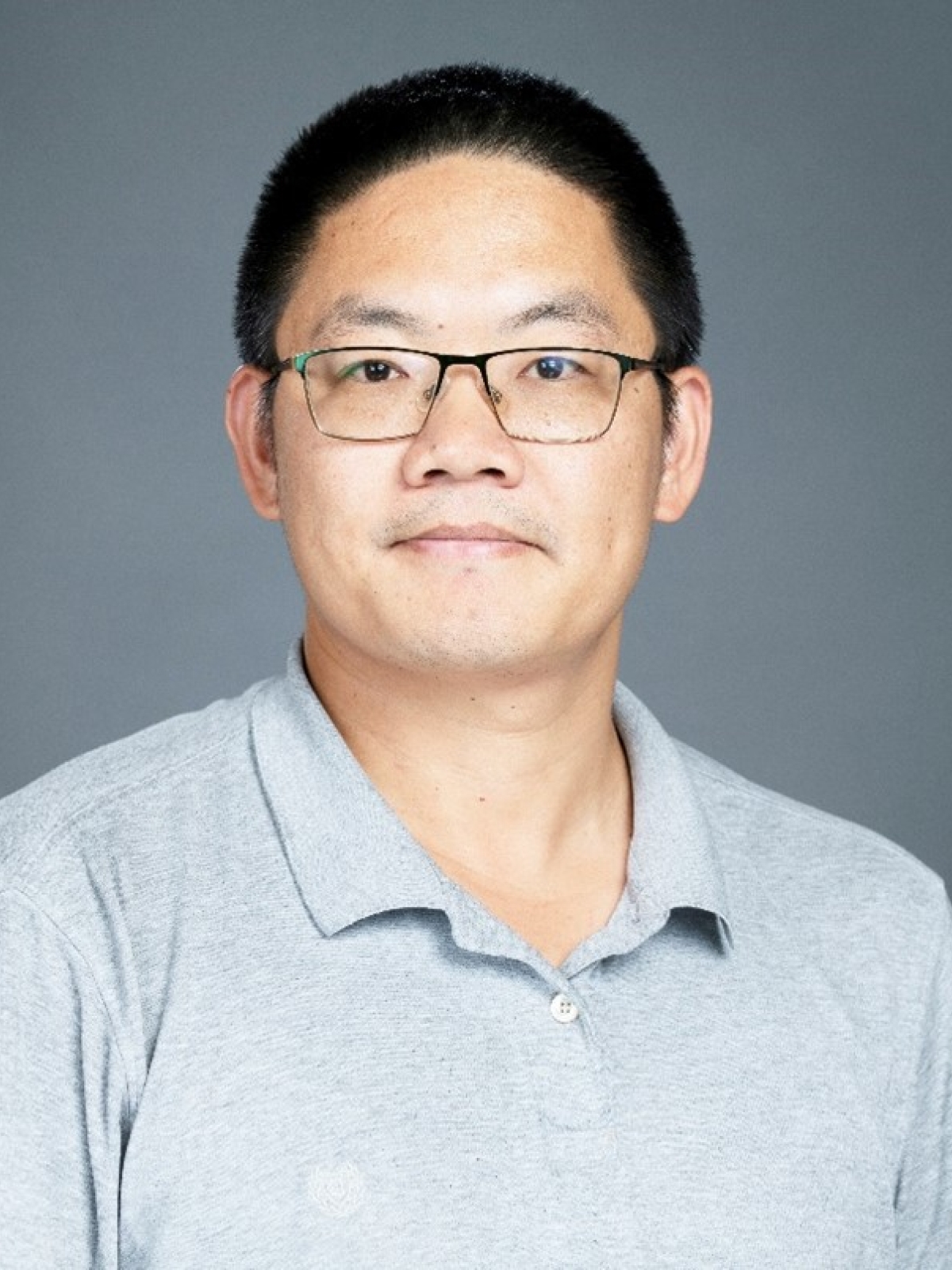
Gengping Zhu
Dr. Gengping Zhu is an Entomologist at Washington State University Department of Entomology. His research focuses on insect niche and distribution modeling, and their applications in insect biodiversity and conservation. He employs statistical analyses, mathematical modeling, and field surveys to examine fundamental and applied questions in regional and global invasive insect management, as well as functional insect biodiversity and conservation. Dr. Zhu has extensive experience in ecological models (i.e., habitat suitability model and phenology model). He is proficient in ecological niche modeling for invasion risk assessments and has worked in this field for over a decade. Dr. Zhu has developed habitat suitability models for more than 20 invasive insect species (e.g., brown marmorated stink bug, codling moth, spotted wing drosophila, Northern giant hornet, Japanese beetle, emerald ash borer). Dr. Zhu obtained his PhD from Nankai University (China) and received training in spatial analysis and mathematical modeling from the University of Kansas (Lawrence) and University of Tennessee (Knoxville).

Nan Xu
Nan Xu earned her Ph.D. in Soil and Water Sciences from the University of Florida, with a focus on sustainable crop production research and extension. Her work has emphasized the use of organic amendments, cover crops, and crop rotation to improve soil health, enhance crop performance, and support sustainable farm management. She has led multiple research and on-farm projects promoting practices like anaerobic soil disinfestation (ASD) and vegetable grafting. Dr. Xu works closely with growers and extension agents to translate scientific findings into practical, real-world applications. She is passionate about agricultural sustainability and delivering science-based solutions through educational programming, field days, and webinars. Her work supports resilient cropping systems while minimizing environmental impacts. In her free time, Dr. Xu enjoys traveling and learning from different cultures, which enriches her personal and professional growth.
Hermiston Farm Fair 2025